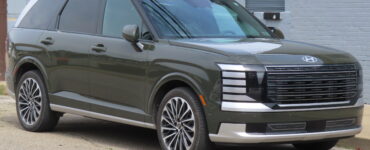
Do you need tire chains for AWD? Not on most winter days, but yes when a chain control or chain law covers every vehicle, as California’s R3 and Colorado’s chain law do. All-wheel drive earns you a pass on the middle rungs of those laws and nothing at the top one. So the answer that holds up is to carry a set that fits your exact tire size and that your owner’s manual allows.
A set of chains rides in my truck’s winter kit from the first hard frost, right beside the block heater cord and a shovel. I’ll admit I spent a lot of years treating four-wheel drive as the exemption, full stop, and it’s really only an exemption some of the time. On storm days the chain-up pull-offs on mountain passes fill with pickups and SUVs, because an AWD badge doesn’t change what the sign says.
Where all-wheel drive gets a pass, and where it stops
All-wheel drive can exempt you at one level of a chain control and not at the next. The rule is set by the state, the road and the day, so the sign wins over your drivetrain every time. The clearest way to see it is to walk up the ladder in California, because Caltrans spells out three levels.
R1 requires chains on all vehicles except passenger vehicles and light trucks under 6,000 pounds that have snow tires on at least two drive wheels. R2 requires chains or traction devices on all vehicles except four-wheel or all-wheel drive with snow-tread tires on all four wheels, and those vehicles must still carry a device. R3 says chains or traction devices on all vehicles, no exceptions. The posted limit with chains is 25 or 30 miles an hour. This is the rule people search for around Lake Tahoe, Donner Summit and Big Bear, and notice that even the R2 pass depends on your tires as much as your drivetrain.
Colorado gets to the same place by a different road. Its traction law covers I-70 from Morrison to Dotsero every September 1 through May 31, or whenever conditions call for it. The state rules treat an AWD or 4WD vehicle as compliant when all drive wheels are engaged and each tire carries 3/16 inch of tread or more. The chain law is the final step before a highway closes, though, and then every vehicle needs chains or an approved traction device on two or more drive tires. Fines start at $100 plus a $33 surcharge. Block a lane and it becomes $500, with a $157 surcharge on top.
The rest of the Mountain West follows the pattern, with local wrinkles. In Utah, on I-80 in Parleys Canyon, UDOT sets AWD and 4WD vehicles a minimum of M+S tires on all wheels, though chains, snow socks or three-peak mountain snowflake tires on all wheels are more reliable, and the Cottonwood Canyons add a stricter class with at least 5/32 inch of tread. WYDOT has two chain-law levels in Wyoming. At Level 2, travel can be limited to vehicles with chains, or AWD vehicles with mud-and-snow or all-weather tires, and the fine is $250, or $750 if you cause a closure. In Montana the state can require chains in marked areas at any time of year. AutoSocks are an approved alternative there, and studded tires are legal from October 1 to May 31.
Commercial rules are tougher. Colorado asks commercial vehicles for chains on at least four drive tires, while Wyoming wants chains on two drive wheels at opposite ends of the axle at Level 2. Passenger drivers get lighter rules, but not a free pass at the top level. Because tires decide so much of this, the choice between winter tires, all-season and all-weather matters before chains ever come up. Good tires keep you under the chain-control levels more often.
The owner’s manual outranks the badge
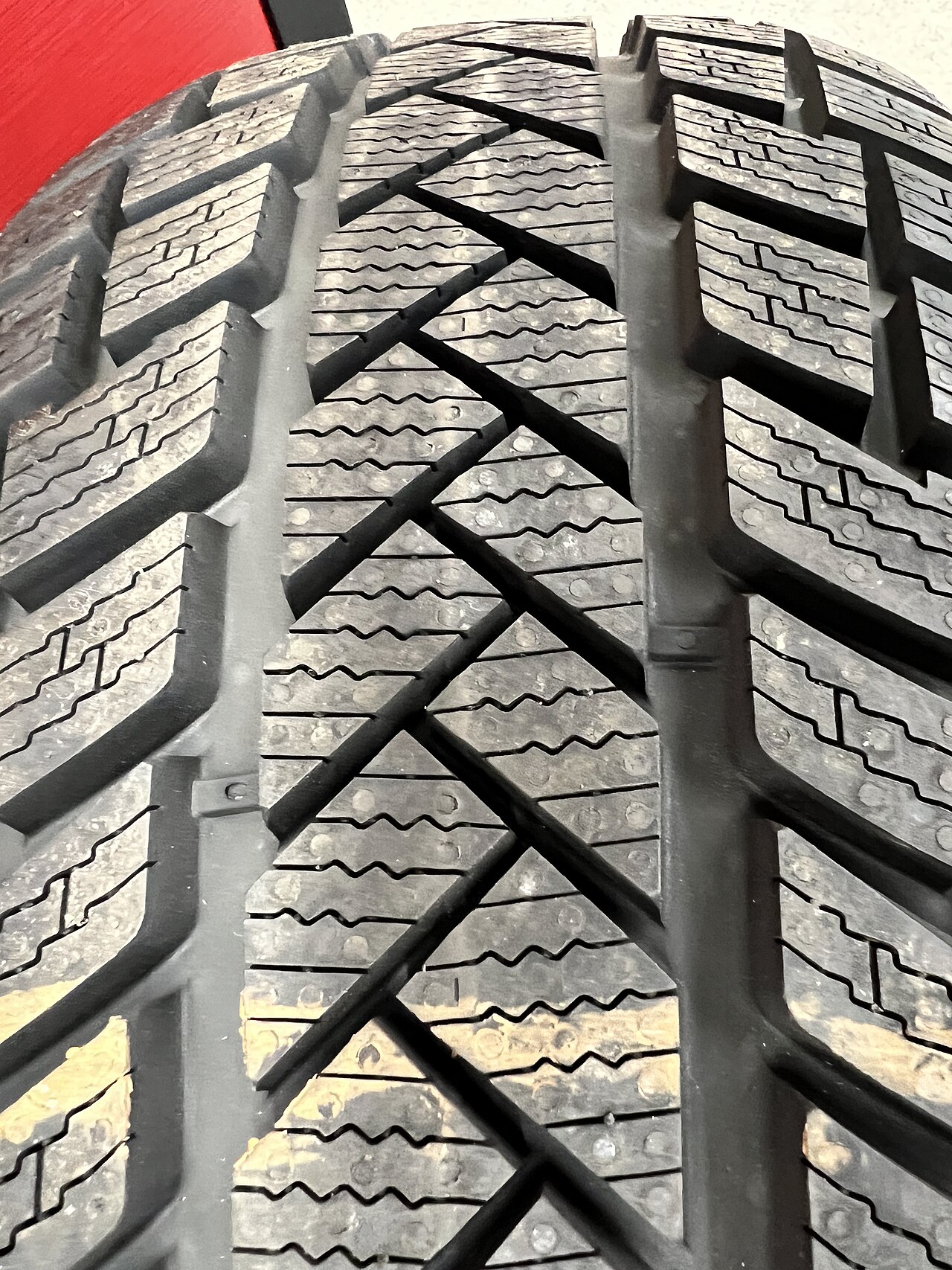
Once a sign says chains, the next question is two wheels or four, and the answer is in your owner’s manual. That is the whole answer, because clearance around the tire, brake lines and sensors differs by vehicle. Several makers say front wheels only, even on AWD models, and they have been saying it for a long time.
A Toyota RAV4 manual from 2009 says to install chains on the front tires and not to exceed 30 mph or the chain limit, whichever is lower. An Audi A4 manual from 2013 allows chains on the front wheels only, and only for certain tire sizes, and it adds that a chain requirement “normally also applies to vehicles with all wheel drive.” A Subaru Forester manual from 2010 goes further: standard tire chains cannot be used because of tight clearance, and only an SAE class S device is allowed, on the front wheels.
Those manuals are well over a decade old, and they are worth bringing up because they show how long the fine print has been ahead of the folk wisdom. Newer models differ, so check the manual for your exact year. AAA gives a general rule in its chains and cables guide: with four-wheel drive engaged, chains go on all four tires when conditions require chains. Your manual overrides that. If it is silent, ask the dealer before you buy, and if it forbids chains and only allows class S devices, treat that as your answer and don’t look for a way around it.
Chains, cables or socks
What the manual allows decides which of the three traction devices you’re shopping for. Prices in the table are per pair for a typical car, SUV or light truck.
| Device | Grip | Ease of fitting | Price range | Legal acceptance |
|---|---|---|---|---|
| Link or diamond chains | Best in deep snow and ice | Hardest to fit, easier with self-tensioning styles | $50–$280 | Accepted wherever chains are required, if they fit and meet the state’s rules |
| Cable chains | Good in light snow, less than chains | Easier than chains, low clearance | $30–$155 | Often accepted as a traction device; check the state list |
| Textile snow socks | Fine for light snow and ice, short stretches | Easiest, slip over the tire | $32–$160 | Not accepted everywhere chains are required |
Prices are approximate, current as of publication, and change frequently — confirm the latest price with the retailer before buying.
Those prices cover the range across big retailers and buying guides this month. Socks can cost more than basic chains, so they are not always the cheap pick.
If your manual allows chains and your tires have the clearance, a self-tensioning set is what I’d buy for mountain passes. Chains grip best, and the self-tensioning kind are the easiest to fit once you have done it a few times. They also cost the most, which is easier to swallow if you cross a pass every week.
If your manual says no chains, buy class S cables or snow socks sized for your tires. Socks suit short, occasional use, because they are easy to fit and easy on the car. They are built for light snow and short stretches, though, so they’re the wrong tool if you drive steep, unplowed grades often.
The purchase that disappoints is the cheap one-size-fits-many cable set. It looks like a bargain, then it doesn’t clear the wheel well, or your manual rules it out. Leave any set on the shelf if its box doesn’t list your exact tire size, such as 225/65R17, and likewise any device that isn’t on your state’s approved list. Colorado, for one, does not allow clip-on chains and keeps an approved product list. And if you only drive plowed city streets and never cross a pass, you can skip chains and carry a winter kit instead.
Fit them once in the driveway
Do this once at home, in dry daylight, before you need it, because fumbling with frozen hands on a shoulder is the worst time to learn. AAA says to install chains at home first and to keep the instructions in a waterproof bag with them. It takes longer than you expect the first time, and that is the reason to do it where a mistake costs nothing. The order runs from your driveway to the pass.
- Read the owner’s manual for which wheels get chains, the maximum speed and any tire-size limits.
- Match the chain to your tire size, printed on the sidewall, before you buy.
- Lay the chains out flat and untangled. Fit them once in the driveway.
- On the road, pull off in a flat, safe place, out of the travel lane. Wyoming tells drivers not to stop in the driving lane to chain up.
- Fit the chains on the wheels your manual names. Do not let air out of the tires to fit them.
- Drive forward a short distance, and re-tighten. Stop at once if you hear banging.
- Stay at or below 25–30 mph, and no faster than your chain maker allows. Brake and steer gently.
- Take them off when you reach plowed, salted road or see “End Chain Control,” so you do not chew up the chains and tires.
What rides along with the chains
Chains are one item in a winter kit, and CDOT’s winter-travel advice is a good starting list for the rest: a snow brush or ice scraper, cat litter or traction sand, blankets, food, water, flares, a first-aid kit, warm clothing, a shovel and chains or another traction device. Add work gloves, a headlamp and a waterproof mat to kneel on, since chaining up means kneeling in slush. Colorado does not require passenger vehicles under 26,001 pounds to carry chains in any season, but a chain law can still apply when the highway turns bad.
Check the conditions before you leave. In Colorado that means COtrip or 511, and in California it means Caltrans road information. Plan around a closure, because no traction device fixes a closed road. None of this changes with the vehicle, either: the SUVs for snow and ice and the trucks that handle snow best still meet the same signs.
Frequently asked questions about tire chains for AWD
Do you need tire chains with AWD or 4WD?
Not always, and not at every chain level. In California, 4WD or AWD with snow tires on all four wheels is exempt at R2 but not at R3. Carry chains if you plan to cross a pass in winter, and buy them before the storm.
Should I put chains on the front or the rear of an AWD vehicle?
Follow the owner’s manual for your exact vehicle and tire size. Many makers say front only. If the manual says nothing, ask the dealer before buying, since the wrong axle can strike a brake line or sensor.
Are snow socks or cables good enough?
They are fine for light snow and short stretches, and some vehicles can use nothing else. Check that your state accepts them where chains are required. AAA warns that socks are not approved everywhere. For a mountain pass, I would pick chains that fit if the manual allows them.
How fast can I drive with chains on?
Slowly. Caltrans lists 25 or 30 miles an hour, and Oregon says not faster than 30. Your chain maker or manual may set a lower number, and the lowest figure is the one to follow.
This is general information, not professional or legal advice. Chain rules change by road and day, so check your state DOT (COtrip, Caltrans, UDOT, WYDOT, MDT) and your owner’s manual before you travel.