
The best trucks in the snow are the Toyota Tacoma, Toyota Tundra, Chevrolet Silverado 1500, Chevrolet Colorado, Ford F-150 and Ram 1500, each with four-wheel drive. Pick the size that fits your life, then put good winter or all-weather tires on it. The tires matter as much as the badge.
Published November 9, 2026.
Pickups have a reputation for being unstoppable in snow. Half of that is earned. I’ve spent years in big, snow-ready vehicles on Colorado mountain roads, and the lesson that sticks is that a truck goes better than it stops. Four-wheel drive gets you moving. It does very little when the road ahead has turned to ice and the car in front has braked.
Here are six trucks worth a look, with who each one suits and what a winter with it tends to feel like. The table comes first so you can compare them side by side.
Best trucks for snow at a glance
| Truck | Size | How you get 4WD | Ground clearance | Starts around |
|---|---|---|---|---|
| Toyota Tacoma | Midsize | Optional on lower trims, standard from TRD Off-Road up | 10.0 to 11.5 in. | $32,000 to $36,000 |
| Chevrolet Colorado | Midsize | Optional on WT and LT, standard on Trail Boss, Z71 and ZR2 | 7.9 to 10.7 in. | $32,000 to $34,000 |
| Toyota Tundra | Full-size | Optional on most trims, standard on TRD Pro and Capstone | 8.5 to 9.4 in. | $41,000 to $45,000 |
| Chevrolet Silverado 1500 | Full-size | Optional on most trims, standard on Trail Boss and ZR2 | Varies by trim | $37,000 to $45,000 |
| Ford F-150 | Full-size | Optional on most trims, standard on Tremor and Raptor | 8.2 to 12.0 in. | $40,000 to $47,000 |
| Ram 1500 | Full-size | Optional on most trims, standard on Warlock, Rebel and RHO | 8.3 in. and up | $42,000 to $47,000 |
Prices are for the base truck, which is usually rear-drive, so four-wheel drive costs more. One press price guide puts it at roughly $3,000 extra on most 2026 Tundra trims. Ground clearance changes with trim and tires, so check the exact truck you are looking at.
Midsize trucks that make winter easy to live with
Toyota Tacoma
Pick the Tacoma if your winter is a mix of town streets, snowy trailheads and the odd unplowed side road. It rides higher than anything else here, and that is a real advantage when a plow leaves a ridge down the middle of the street. It is small enough to park at the grocery store and still carries a week of ski gear. The catch is that the cheapest trims are rear-drive, so you need to choose 4WD on purpose. Everything from TRD Off-Road up has it as standard.
Chevrolet Colorado
The Colorado is the one to look at when you want to spend less but still get real hardware. Skip the base Work Truck for snow country, since it sits lowest and 4WD is optional. The Trail Boss and Z71 come with 4WD, a two-speed transfer case and an automatic locking rear differential, which is the kit that helps when one rear tire is on ice and the other is on pavement. The ZR2 adds lockers at both ends and is more truck than most people need to reach a ski lot.
Full-size trucks for deep snow and long drives
Toyota Tundra
This is the truck for someone who wants a full-size pickup that simply starts, goes and does not make a fuss on the long Saturday run to the mountains. Toyota’s reputation for trucks that keep going year after year is a big part of its pull, and in a cold-start January that peace of mind counts. It gets less attention than the Detroit trucks, which is fine by me. Budget for the 4WD upgrade, because the base truck is rear-drive. If you want it standard, look at the TRD Pro or Capstone, and be ready for the price that comes with them.
Chevrolet Silverado 1500
The Silverado suits families who tow a camper in summer and need the same truck to shrug off a January storm. It is the easy one to shop for, because the lineup is wide and the Trail Boss comes with 4WD standard. Chevrolet notes that the Z71 off-road package is standard on all of its 4WD models, so even a plain 4WD Silverado is set up for rough roads. Chevrolet’s site also shows a next-generation 2027 Silverado starting a little higher, so ask what is on the lot today.
Ford F-150
Choose the F-150 if you want one truck that can be almost anything, from a bare work truck to a very nice commuter. For snow, the interesting trim is the Tremor. It has 4WD only, a locking rear differential and about 9.4 inches of clearance, which is a full inch more than the ordinary trims. The Raptor takes that to 12 inches and is great fun, though far more than a snowy commute needs. Most F-150 trims are 8.2 inches, so an ordinary one wants good tires more than clearance.
Ram 1500
The Ram is the comfortable one. If your winter is mostly highway miles between a trailhead and a warm kitchen, it is the truck that makes the drive feel shorter. Several trims, including the Warlock and Rebel, come with 4×4 only, so you never have to guess whether the truck you found on the lot has it. The Express sits at 8.3 inches of clearance, so think of it as a good road truck that can handle snow, not a deep-powder machine. Heavy snow country should put tires first.
If you want to compare these with more of the field, our rundown of the best full size pickup trucks covers the size class, and the list of the most reliable pickup trucks helps if repair bills worry you more than snow does.
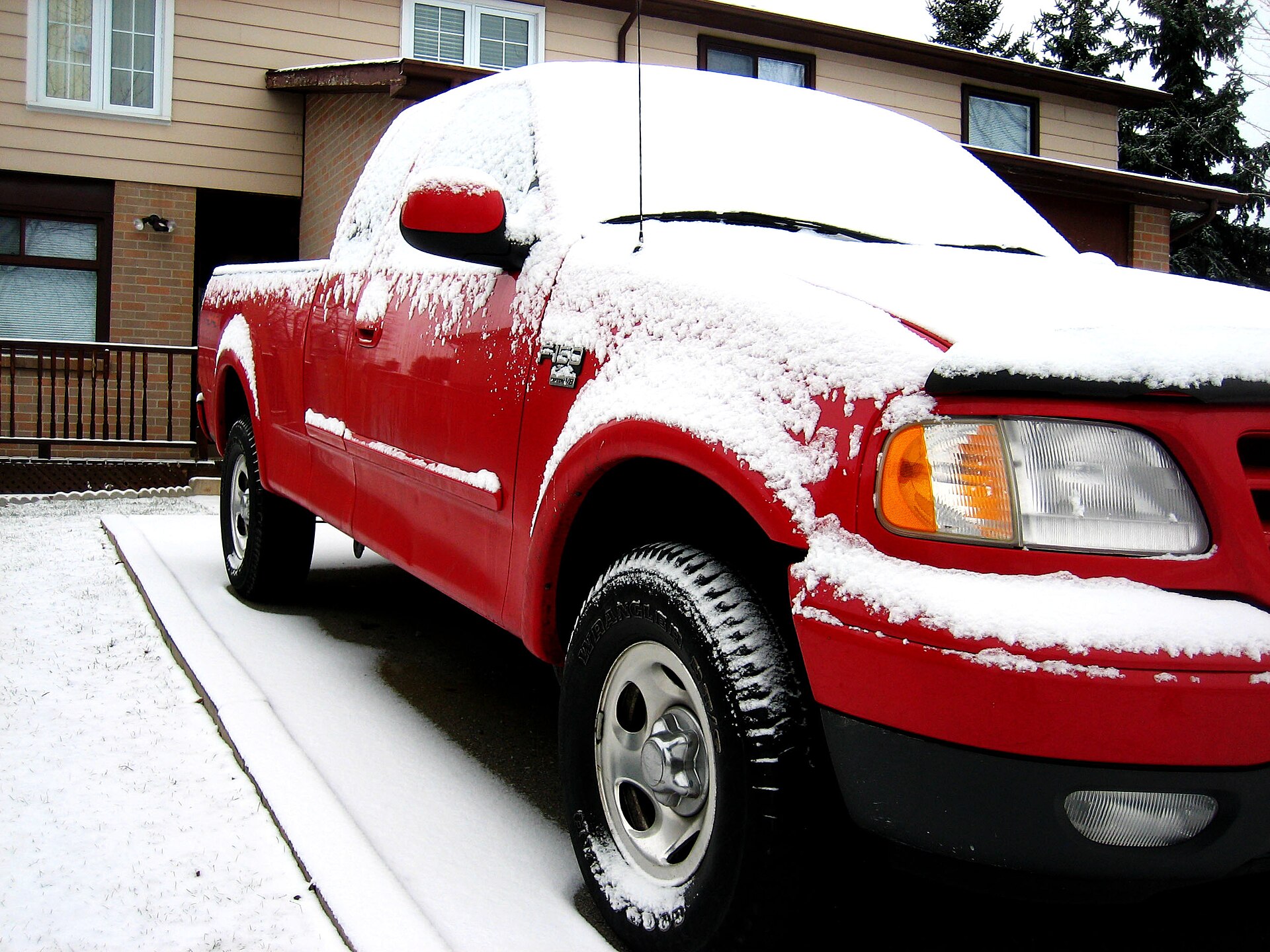
Why an empty pickup bed slides around in winter
Anyone who has watched a pickup fishtail out of a parking lot knows the problem. The engine and cab sit over the front wheels. The bed is nearly empty, so very little weight presses on the rear tires. On ice, the back end gets light and wants to pass the front.
Adding weight over the rear axle helps, but only if you do it carefully. Use something that will not slide, such as sandbags or a few bags of play sand, and keep it low and tight against the back of the cab. Stay inside your payload rating, which is on the sticker in the door jamb. Never ride with a loose load, and take the weight out in spring, since it costs you fuel.
Weight is a helper, not a cure. Most of us would rather skip the sandbags, and the real fix is good tires on all four corners plus a slower approach to every corner and every stop sign.
4WD or auto 4WD: which setting for which road
Many trucks give you a dial or button with a few choices. In plain terms, 2WD sends power to the rear wheels only. A 4WD high setting locks the front and rear together for slippery roads. A 4WD low setting is for deep snow, steep ruts and getting unstuck at crawling speed. Some trucks add an automatic mode that decides for itself when the front wheels should help.
The one thing to watch is the locked 4WD setting on dry or wet pavement. In many trucks it is meant for loose or slippery surfaces, and using it on clear roads can bind the drivetrain and wear parts. Your owner’s manual says which settings suit which roads, so read that page before the first storm. A four-wheel-drive badge is not a licence to drive faster, and it is the only feature I know that makes people do exactly that.
Colorado’s traction law and what it means for trucks
If you plan to drive in the mountains, this part matters. CDOT says the Traction Law runs each year from September 1 through May 31 on the I-70 Mountain Corridor between Dotsero and Morrison, and the state can turn it on for other highways when the weather calls for it. For passenger vehicles, tires need at least 3/16 inch of tread and must be winter tires with the mountain-snowflake symbol, all-weather tires or mud-and-snow tires.
If your tires do not meet that, CDOT says you need chains or an approved traction device on two or more drive tires. The penalty for not following the law is a $50 fine plus a $17 surcharge, and the bigger cost is a stalled truck blocking the interstate on a Saturday. Ski-weekend traffic out of Denver is slow enough already.
That is why the truck matters less than the rubber. Having a 4×4 does not replace the tire rule, and an all-terrain tire that wears down past the limit stops counting. Our guide to winter tires versus all-season and all-weather compares stopping distances and costs if you are deciding which way to go.
Truck or SUV: which is better for snow?
Honestly, it depends on what you carry and tow. A pickup wins when you haul gear, tow a trailer or load a bed with firewood. It loses when you want the quiet, planted feel of a heavier, enclosed vehicle with weight spread more evenly front to rear. If you are torn, read our picks for the best SUV for snow and ice and weigh the two lists against how you actually use a vehicle from Monday to Friday.
Whichever you choose, the habits are the same. Leave room, brake early, steer gently and keep a blanket, a shovel and a phone charger in the cab. Most winter trouble starts in the first hour of a storm, when roads look better than they are.
Frequently asked questions about trucks in the snow
Is a 4×4 truck good in snow?
Yes, with a catch. A 4×4 truck helps you get moving and climb a slick hill, and that is worth paying for if you live where it snows. It does not help you stop sooner, so tires and speed still decide how a storm goes.
Should I put weight in the bed of my truck in winter?
It can help a light rear end, but only if the weight is secure, low and over the rear axle, and within your payload rating. If you are not sure, skip it and spend the money on better tires instead.
Is 4WD or AWD better in snow?
Most pickups here use selectable 4WD, which suits deep snow and rough roads. AWD is more common on SUVs and car-based vehicles and suits plowed, mixed roads. For a truck, pick 4WD, and learn what each setting does before you need it.
Do I need winter tires if my truck has 4WD?
I would say yes if you drive in real snow. Four-wheel drive does nothing for braking, and winter tires help with exactly that. In Colorado you also need tires that meet the Traction Law on the I-70 corridor, and mountain-snowflake or all-weather tires do.
What is the best truck for snow if I’m on a budget?
Look at a midsize truck such as the Colorado or Tacoma, and choose a trim with 4WD from the start. The base trims are cheaper, but you will pay to add 4WD later, and the extra clearance on trail-ready trims helps in unplowed streets.