The best SUV for snow and ice has all-wheel or four-wheel drive, decent ground clearance and four real winter tires. Subaru’s Outback, Forester and Crosstrek, Toyota’s RAV4 and 4Runner, Honda’s CR-V and Passport, and the Mazda CX-50 all fit. Below are ten picks.
Updated November 8, 2026.
Best AWD SUV for Snow and Ice Compared
I’ve spent years in big, snow-ready vehicles on mountain roads, and the first thing I tell anyone shopping for winter is to read the whole spec sheet, not just the drivetrain line. This table puts the basics side by side. Prices are each maker’s starting MSRP, read on its own site on November 8, 2026, and they leave out destination fees, taxes and options.
| Model | Drivetrain | Ground clearance | Starting MSRP |
|---|---|---|---|
| Subaru Outback (2027) | Symmetrical AWD, standard | 8.7 in. (Wilderness 9.5 in.) | From $32,995; Wilderness from $43,995 |
| Subaru Forester (2026) | Symmetrical AWD, standard | 8.7 in. (Wilderness 9.3 in.) | From $29,995; Wilderness from $36,995 |
| Subaru Crosstrek (2027) | Symmetrical AWD, standard | 8.7 in. (Wilderness 9.3 in.) | From $26,995; Wilderness from $33,795 |
| Subaru Ascent (2027) | Symmetrical AWD | 8.7 in. | From $40,795 |
| Toyota RAV4 (2026) | FWD or AWD | 8.1 to 8.5 in. | From $31,900 |
| Toyota Highlander (2026) | Dynamic Torque Vectoring AWD | 8 in. | From $46,270 |
| Toyota 4Runner (2027) | 2WD, part-time 4WD or full-time 4WD | 8.1 to 10.1 in. | $43,490–$68,870 across 12 trims |
| Honda CR-V (2027) | FWD or AWD (AWD standard on TrailSport Hybrid and Sport Touring Hybrid) | 8.2 in. with AWD (7.8 in. with 2WD) | $31,520–$42,950 across trims; Hybrid from $36,030 |
| Honda Passport (2027) | i-VTM4 AWD, standard | 9.6 in. on the TrailSport | $45,195–$55,195 across trims; TrailSport from $49,995 |
| Mazda CX-50 (2026) | i-Activ AWD, standard | 8.3 to 8.6 in. | From $29,900 |
Where a model has a Wilderness or TrailSport version, it sits higher and costs more, which is why it gets its own number. The write-ups below are my take; the table is where the figures live.
AWD vs 4WD in Snow
Most of us have watched an SUV pass us on a snowy hill and then sit sideways in a ditch at the next curve. Drivetrain gets you moving. It does very little for stopping or turning.
All-wheel drive systems generally run by themselves, so you do nothing. Four-wheel drive is usually something you choose. Toyota describes the 4Runner’s part-time 4WD as a system you turn on when the terrain gets tough, while its full-time 4WD kicks in on its own. For plowed highways and icy commutes, AWD is the easier fit. For deep, unplowed snow and rough roads, 4WD and extra clearance earn their keep.
The Colorado Department of Transportation takes the same view on the mountain corridors. Its traction law page says it highly recommends an AWD or 4WD vehicle in the mountains whenever possible.
Do You Need Winter Tires With AWD?
Yes, if you drive in real winter. Anyone who has crawled up a mountain highway in ski-season traffic has noticed that the cars on proper winter tires are the ones still moving. This is the part of the sales pitch that gets left out. Consumer Reports, in a report carried by WXYZ, says its engineers found that winter tires matter far more than all-wheel drive in many situations. They improve grip for accelerating, braking and turning on any vehicle.
The same report says some AWD vehicles struggled to stay on course on their original all-season tires. For heavy wintry conditions, Consumer Reports recommends replacing all four tires with winter tires, even if the vehicle has all-wheel drive.
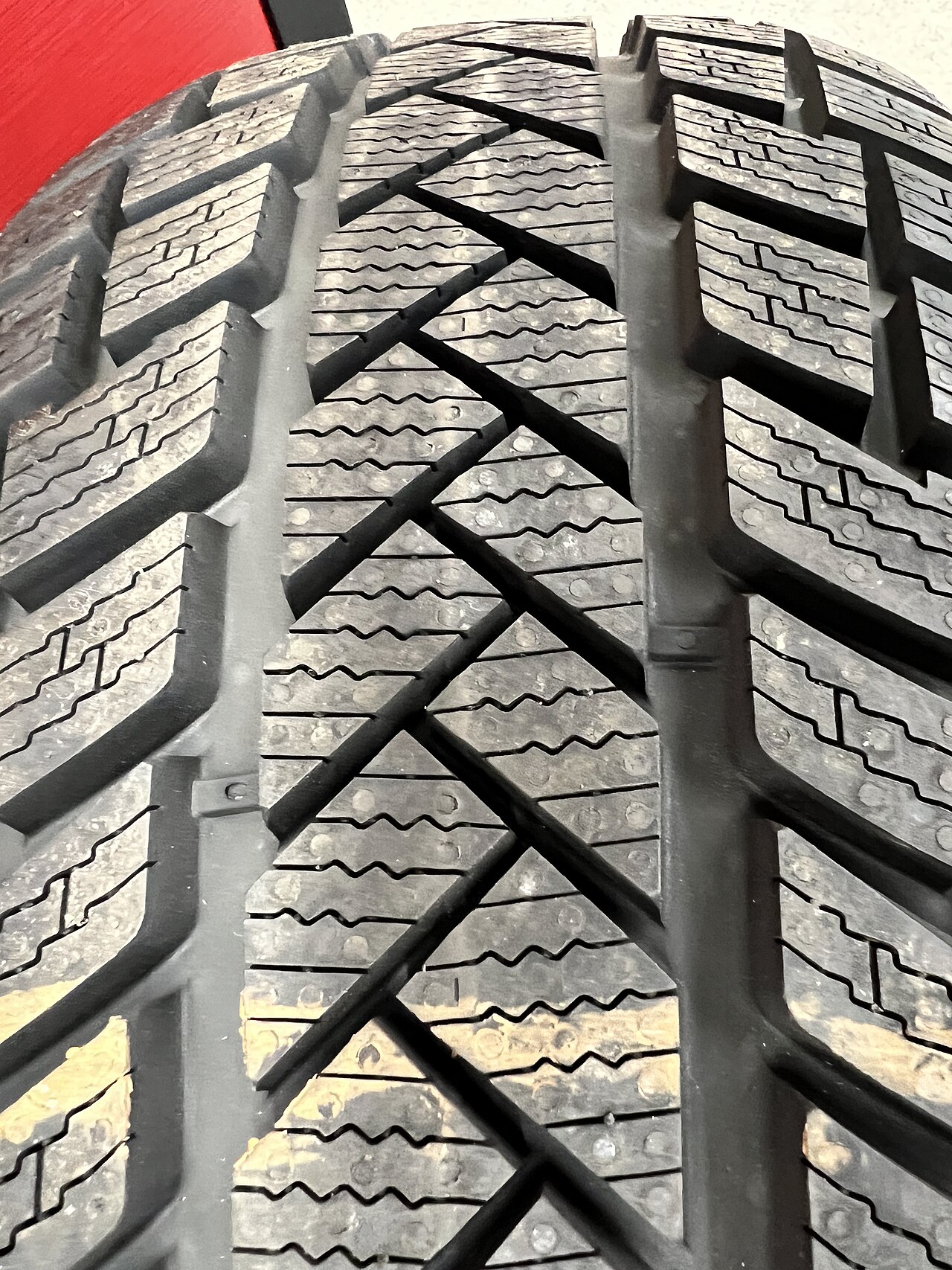
Tire Rack backs this up from the testing side. It says it ran acceleration, braking and cornering tests on ice, and the results confirmed the traction advantage winter tires have over all-season tires. It also says a rear-wheel-drive vehicle with all-season tires in front and winter tires in back needs slower cornering speeds and longer stopping distances than one with four winter tires. Buy a set of four, not two.
Subaru Outback in Snow
If I had to hand one vehicle to a friend who hates the idea of driving a truck but lives where it snows, it would be the Outback. It is easy to climb into, it carries skis and a dog without drama, and the AWD works in the background so you never have to think about it. That is the whole charm: it makes a winter commute feel ordinary.
Pick it if you want a wagon that shrugs off plowed and half-plowed roads. Skip it if your driveway is a quarter mile of drifts, unless you step up to the Wilderness, which has the most clearance on this list outside the 4Runner and Passport. Standard Symmetrical AWD, 8.7 inches (9.5 on the Wilderness), from $32,995 on Subaru’s site. Our guide to the best midsize SUVs covers the bigger family-hauler end of the market.
Subaru Forester in Snow
The Forester is the boxy, practical cousin, and that shape is its best snow feature. The tall, upright shape is easy to see out of and easy to load, which counts for more than most buyers expect on a gray January morning. It is the one I would call the sensible default.
Pick it if you want clear sight lines and an easy back seat for a family. Skip it if you want something sporty or very cheap, because the Crosstrek is the better fit for both. Standard AWD, 8.7 inches (9.3 on the Wilderness), from $29,995, with X-MODE for slick surfaces, per Subaru.
Subaru Crosstrek in Snow
The Crosstrek is the one for people who want the winter peace of mind without the winter price. It is small enough to wedge into a tight street spot between snowbanks, and it still has the clearance and the AWD to get you out of one. Think of it as the vehicle that does the job and stays out of the way.
Pick it if you commute alone or as a couple and park in the city. Skip it if you regularly haul four adults and their gear. Standard AWD, 8.7 inches (9.3 on the Wilderness), from $26,995, per Subaru. For more small crossovers, the best compact SUVs list is a good next stop.
Subaru Ascent in Snow
Families who need three rows and live where it snows have fewer good answers than you would think, and the Ascent is one of the honest ones. You get AWD on every trim, so there is no “ask for the right box” step at the dealer, and the extra length makes it calm and steady on a long highway grind.
Pick it if the third row gets used and your winters are long. Skip it if you mostly drive two people around, since you will be paying for space you do not use. Symmetrical AWD and 8.7 inches on every trim, from $40,795, on Subaru’s spec page.
Toyota RAV4 in Snow
The RAV4 is the safe bet, and I mean that kindly. It is easy to drive, easy to park and easy to live with. In snow, the choice that matters is on the order form: get the AWD, because it is optional.
Pick it if you want the low-drama answer for plowed roads. Skip it if you have a long unplowed driveway; it sits a little lower than the Subarus. Front- or all-wheel drive, 8.1 to 8.5 inches, from $31,900, per Toyota. If dependability is your top filter, see our list of the most reliable SUVs.
Toyota Highlander in Snow
The Highlander is a big, quiet family cruiser, and it is at its best on a long interstate drive in falling snow with a full back seat. It feels planted and unhurried. What it does not feel like is an adventure vehicle, and it was never trying to.
Pick it if your winters mean cleared highways and school runs. Skip it if you drive unplowed roads, because at 8 inches it has the least clearance of the AWD picks here. Torque-vectoring AWD, from $46,270, per Toyota.
Toyota 4Runner in Snow
This is the one you buy when snow stops being weather and becomes terrain. It is tall, it is tough, and the real 4WD gives you the confidence to turn onto a road nobody has plowed. It is also thirsty and wide, and it feels every inch of that in a grocery-store lot. A 4Runner will get you to the trailhead, sure. The ski-traffic crawl will still get you there last.
Pick it if you have rough roads, a long drive or trailheads on the weekend list. Skip it if your winter is mostly a paved commute, because you will pay for capability you never use. 2WD, part-time or full-time 4WD, 8.1 to 10.1 inches of clearance, $43,490–$68,870 across 12 trims, per Toyota.
Honda CR-V in Snow
The CR-V is the quiet overachiever of the group. Nothing about it is dramatic, but the cabin is roomy, and the AWD versions are a sensible fit when the road turns white. If you want the family car that also happens to be ready for winter, this is a strong contender.
Pick it if you want a roomy, easy daily driver and are happy to tick the AWD box. Skip it if you want the most ground under the car, since 8.2 inches with AWD is about the middle of the pack. AWD is optional on most trims and standard on the TrailSport Hybrid ($39,200) and Sport Touring Hybrid, with the range running $31,520–$42,950, per Honda.
Honda Passport in Snow
The Passport is for the person who has outgrown the CR-V and does not want a three-row bus. It is a two-row midsize with the stance of a proper outdoor vehicle, and the TrailSport version adds an inch of lift so the front bumper is less likely to plow a drift. It is a good pick for ski weekends with a roof box and a full load.
Pick it if you want AWD on every trim and a taller stance than most crossovers, without moving up to a truck-based SUV. Skip it if you need a third row; look at the Ascent or Highlander instead. i-VTM4 AWD is standard, the TrailSport shows 9.6 inches, and it runs $45,195–$55,195 across trims ($49,995 to start for the TrailSport), per Honda.
Mazda CX-50 in Snow
The CX-50 is for people who like driving and refuse to give that up in January. Mazda pitches it on driving feel as much as weather, which makes it the sportiest-minded pick here, and the AWD is standard so the snow part is already handled. I think that is a fair way to shop.
Pick it if you enjoy the drive and want winter covered without a second thought. Skip it if you want the biggest cargo area or a plush ride. i-Activ AWD standard, 8.3 to 8.6 inches, from $29,900, per Mazda.
Does Ground Clearance Matter in Snow?
It matters in deep, unplowed snow and on rutted roads, where a low bumper turns into a plow. It matters much less on a plowed highway or glare ice. On ice, tires and speed do the work, and an extra inch of clearance does nothing for you.
Most of us have seen a tall SUV driven too fast because it felt safe. Height can make you feel safer without adding any grip, which is the part to watch.
Colorado Traction Law
If you ever drive in Colorado’s mountains, learn this one. The Colorado Department of Transportation says that during a Passenger Vehicle Traction law, passenger vehicles need tires with 3/16 inch of tread depth that are rated all-weather or winter (the mountain-snowflake icon, or M+S), or they must carry chains or an approved alternative traction device.
When the stricter chain law is on, CDOT says every vehicle must have chains or an approved alternative traction device. Its page lists the penalty for not complying as a $100 fine plus a $33 surcharge, rising to a $500 fine plus a $157 surcharge if you cause a travel lane to close. CDOT says it can use these laws on any state highway, and its page names I-70 from Morrison to Dotsero between September 1 and May 31.
The practical point is that AWD alone does not settle it. The tires do. CDOT’s own page says a safe vehicle and quality tires with adequate tread are crucial for winter driving.
How to Choose Between These SUVs
Start with your roads, not the badge. If you mostly deal with plowed highways, a Crosstrek, Forester, CX-50, CR-V or RAV4 with AWD will do. If you have a long unplowed driveway or drive rough mountain roads, the Outback Wilderness, Passport TrailSport or 4Runner gives you more room under the car.
Then budget for tires. A second set of wheels with winter tires is a cost most buyers forget, but it does more than any badge on the back. If you are weighing a pre-owned model instead, our list of the best used SUVs is worth a look, and the same tire rule applies.
Frequently asked questions about the best SUV for snow and ice
What is the best SUV for snow and ice?
For most people, I would start with a Subaru Outback or Forester: standard AWD, good clearance and a fair price. Pick the Toyota 4Runner or Honda Passport TrailSport if you face deep, unplowed snow, and the Mazda CX-50 if you want something fun to drive. Whichever you pick, put four winter tires on it.
Is AWD or 4WD better in snow?
For paved, plowed roads, choose AWD, because it works on its own and you never have to think about it. For deep snow and rough roads, choose 4WD with more clearance. In both cases, tires decide how well you stop and turn, so do not skimp there.
Do you need winter tires with AWD?
For heavy winter conditions, yes, and I would buy them before paying extra for any option package. Consumer Reports recommends replacing all four tires with winter tires even if the vehicle has all-wheel drive, because winter tires improve grip for accelerating, braking and turning.
How much ground clearance do you need for snow?
No maker or agency sets one number, and Colorado’s traction law sets rules for tires rather than clearance. The SUVs above range from about 8 to 10.1 inches. I would aim for 8.5 or more if you have an unplowed driveway, and not worry about it if your roads get plowed.
Header photo: Sanmusa, Wikimedia Commons, CC BY-SA 3.0.