The best cars for winter driving in 2026 are the ones with all-wheel drive that you can actually afford to keep on four winter tires. This list covers hatchbacks, sedans and a few small crossovers, from the Subaru Impreza to the Toyota Prius with AWD.
Published November 8, 2026.
Best Cars for Winter Driving Compared
I’ve driven a big family through more Chicago-area winters than I can count, and the shopping mistake I see most is buying the tallest vehicle on the lot when a good car would do. A car is easier to park between snowbanks, cheaper to fill and usually cheaper to insure. The table lists each model’s drivetrain, ground clearance where the maker publishes it, and the starting price from the maker’s own pages, read on November 8, 2026. Prices leave out destination fees, taxes and options.
| Model | Drivetrain | Ground clearance | Starting price |
|---|---|---|---|
| Subaru Impreza hatchback (2026) | Symmetrical AWD, standard | 5.1 in. | About $26,600 |
| Mazda3 hatchback (2026) | FWD, or i-Activ AWD on select trims | Not listed | $30,765–$38,090 for the AWD trims |
| Toyota Camry hybrid (2027) | FWD, or AWD on all five grades | Not listed | From $29,700 for FWD; AWD costs more |
| Toyota Prius (2027) | FWD, or AWD on every grade | Not listed | $30,155–$37,170 for the AWD grades |
| Toyota Corolla Hybrid (2027) | FWD, or available AWD | Not listed | From $25,175 for the FWD hybrid; AWD costs more |
| Hyundai Kona (2027) | FWD, or HTRAC AWD on all trims | 8.1–8.3 in. with AWD (6.7–6.9 in. with FWD) | From $25,500 for the FWD SE; AWD costs more |
| Mazda CX-30 (2026) | i-Activ AWD, standard | Not listed | From $26,375 |
Where a maker lists no clearance, I left it off rather than guess. The Subaru Outback wagon and the taller SUVs live in our guide to the best SUV for snow and ice, so I’ve kept those out of here.
Do You Need AWD for Winter Driving?
Not always, and I’d say so even though every car here offers it. AWD helps you get moving from a stop and climb a slick driveway. It does nothing extra when you brake or turn. Most of us have felt a car with a confident engine and tired tires drift past a stop sign at three miles an hour.
I still lean toward AWD for anyone with a hill, an alley that never gets plowed or a long, cold commute. The peace of mind is real, and so is the extra grip when a plow leaves a ridge at the end of the driveway. If your winters are mild and your streets get cleared fast, a front-wheel-drive car on good winter tires is a sound choice too.
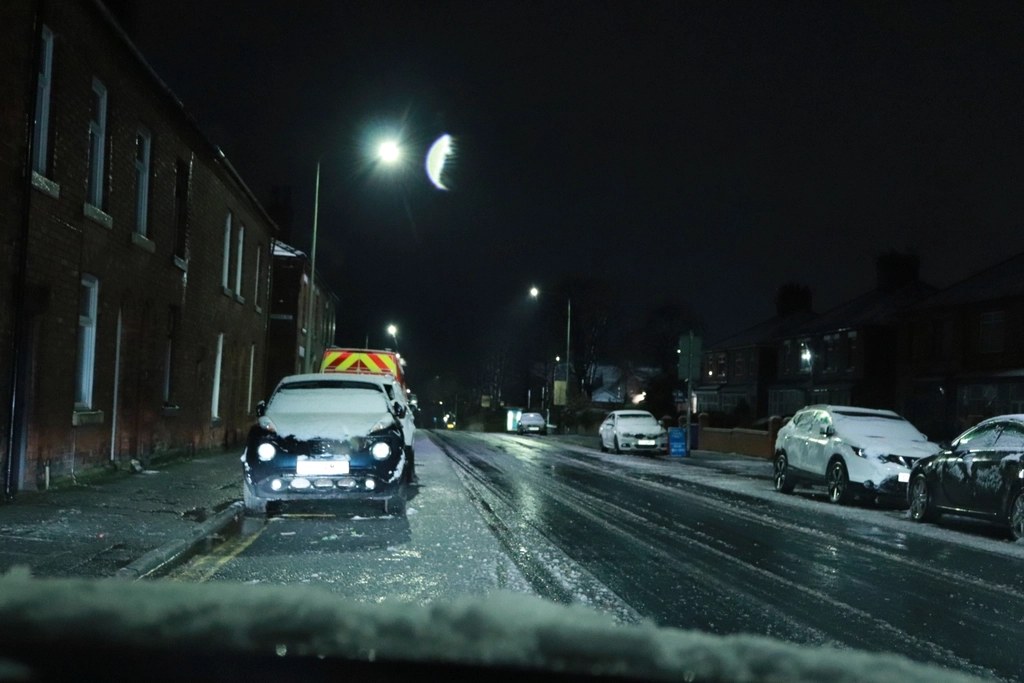
Subaru Impreza: The Cheap, Honest Winter Car
If you want winter peace of mind without a big car payment, start here. The Impreza is a small hatchback with all-wheel drive on every one it sells, so there’s no option box to forget at the dealer. It’s the car I’d point a college student toward, or a parent shopping for a teen who has just earned a license.
Living with it in January is pleasant. It fits in tight lots, the back hatch makes loading boots and groceries easy, and nothing about it feels fussy. The catch is the low ride. Subaru lists 5.1 inches of ground clearance on its spec page, so deep, unplowed snow will drag on the bumper. Pick it if your roads get plowed. Skip it if your driveway is a long stretch of drifts; the Crosstrek in our SUV guide sits higher. AWD is standard, from about $26,600.
Mazda3 Hatchback AWD for Drivers Who Like Driving
Some of us refuse to give up a fun car just because the temperature drops. That’s the Mazda3 buyer. It feels tidy and quick in the corners, the cabin looks more expensive than it is, and the AWD version keeps that character on a snowy on-ramp.
Here’s the part to watch. Mazda says front-wheel drive is standard and i-Activ AWD comes on select trims, so the cheap Mazda3 you see advertised is not the one you want for snow. Pick the AWD trim, which Mazda’s pricing release puts at $30,765–$38,090, and the turbo version adds up to 250 horsepower per Mazda. Skip it if you want a big back seat; it’s a compact. It’s a good fit for one or two commuters who like a car with some personality.
Toyota Camry Hybrid AWD: The Grown-Up Sedan
Sedans have a reputation problem, and I don’t think they deserve it. The Camry is the calm highway car that makes a gray, salty commute feel less like a chore. Toyota’s 2027 press release says every Camry is now a hybrid, and AWD is available on all five grades.
That matters if you spend your winter on the interstate. The AWD system sends power to the rear wheels when it senses the fronts slipping, and Toyota lists 232 net horsepower with it. It’s a roomy, quiet family sedan for people who have outgrown the idea of a sporty car. Skip it if you’d rather have a hatchback’s cargo room. The FWD Camry starts at $29,700; Toyota’s release doesn’t list the AWD price, so ask your dealer.
Toyota Prius AWD: The Surprise Winter Pick
Nobody expects a Prius to be on a winter list, which is exactly why I’m adding it. The current Prius looks nothing like the old one, and the AWD version adds a rear electric motor that helps on that first snowy hill. It’s the answer for anyone who drives a lot and hates filling up in a cold wind.
Toyota’s press release lists an EPA-estimated 53 MPG combined for the LE AWD, with 196 net horsepower. Pick it if your commute is long and mostly plowed. Skip it if you want lots of cargo height for a big family’s gear. The AWD grades run $30,155–$37,170, before the dealer’s processing and handling fee.
Toyota Corolla Hybrid: The Budget Hybrid With an AWD Option
The Corolla is the car I recommend when the question is “what’s the least I can spend and still be warm and safe?” It isn’t exciting. It’s the car that starts, heats up and gets everyone to a job on time. A winter car earns its keep by being boring on the worst morning of the year.
Toyota says the hybrid offers available Electronic On-Demand AWD, which uses a separate electric motor to send power to the rear wheels. The hybrid starts at $25,175 on the maker’s page in front-wheel drive. Make sure the car on the lot has the AWD you meant to buy. It’s a fine pick for a first car or a second household car, and a poor one if you need a lot of back-seat room.
Hyundai Kona AWD: A Small Crossover With Real Clearance
The Kona is a small crossover for people who want a higher seat without a big vehicle. The useful number is on Hyundai’s spec chart: minimum ground clearance is 8.1 to 8.3 inches with AWD, against 6.7 to 6.9 inches with front-wheel drive. That gap is the reason to choose the right version.
Hyundai says its HTRAC AWD is available on all trims, and the SE starts at $25,500 in FWD. It’s a good city-winter car, easy to park and easy to get in and out of with a coat on. Skip it if you want a big cargo area. Check the AWD price with the dealer, since the starting figure is for front-wheel drive.
Mazda CX-30: The Crossover That Feels Like a Car
The CX-30 is the one I’d choose for a driver who wants a crossover and still wants it to feel like a car. It’s a small, sporty-looking hatch with a higher seat, and Mazda makes i-Activ AWD standard on every one. No box to tick, no trim to hunt for.
Pick it if you want a stylish small crossover and you drive mostly on plowed roads. Skip it if you want a lot of room in the back seat. It starts at $26,375 on Mazda’s site, and a turbo engine with up to 250 horsepower is available.
What Matters More Than the Car
Tires come first. A good car on tired tires loses to an average car on four winter tires. Our comparison of winter tires vs all season has the stopping numbers, so I won’t repeat them here.
After that it’s habits. NHTSA’s winter driving tips say to slow down, because it’s harder to control or stop a vehicle on a slick surface. It also says to leave plenty of following distance, keep the gas tank close to full, and avoid crowding a snowplow. If you get stuck, clear snow from the exhaust pipe before you run the engine to warm up.
A small kit in the trunk helps more than people think: a shovel, scraper, blanket, flashlight, water and some sand or kitty litter for traction. That’s the same list NHTSA gives. Anyone who has stood in a parking lot with a dead phone knows the charger belongs on the list, too.
If a new driver in your house is facing a first winter, practice in an empty lot after the first snow. Our picks of cars for teen drivers cover the buying side. The practice is up to you.
How to Choose Your Winter Car
Start with your roads. If you live on a plowed street, an Impreza, Mazda3 or Camry does the job. If you often face unplowed snow, step up to the Kona or one of the taller picks in the SUV guide. If you drive a lot, the Prius is hard to beat on fuel.
Then add the cost of tires to your budget. Year-end is also when dealers push hard on incentives, and our guide to Black Friday car deals explains how to read the offers.
Frequently asked questions about the best cars for winter driving
What is the best car for winter driving?
For most people I’d start with the Subaru Impreza, because AWD is standard and the price is low. If you like driving, the Mazda3 AWD is my pick. Whichever you choose, put four winter tires on it.
Is a sedan good in snow?
Yes, with AWD and good tires. A sedan like the Camry is calm on plowed highways. It sits lower than a crossover, so I’d skip it if you drive through deep, unplowed snow.
Is front-wheel drive enough for winter?
It can be, if your streets get cleared quickly and you use winter tires. I’d still pick AWD for hills and long, cold commutes, since it helps you get moving. It won’t help you stop, so tires matter either way.
Is a hybrid a good winter car?
Yes, if you choose an AWD version. The Prius, Camry and Corolla Hybrid all offer one, and they save on fuel during long, cold commutes. Just check that the car you buy is the AWD one, since the starting price is usually for front-wheel drive.
Featured photo: "Cars driving through blowing snow on NY 211 outside Montgomery" by Daniel Case, CC BY-SA 3.0, via Wikimedia Commons.