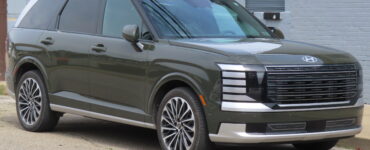
The best family SUV 2026 has to offer is the Kia Telluride, and what puts it there is everything behind the front seats. It carries IIHS’s Top Safety Pick+ award and a Good+ rating for car-seat anchors, it holds 22.3 cubic feet behind the third row, and it starts at $39,190. The Honda CR-V is the default answer in a lot of driveways. For a family with kids in the back seat, it’s the one to leave off the list, because of what its crash test says about that back seat.
For years one vehicle in our house carried several sizes of kid at once: a booster by the door, a long-legged teenager folded into the back row. So I’ve sorted these seven by what the back rows do at each stage. A family SUV gets bought for the kids you have and then kept for the kids they turn into, teen drivers included.
| Rank and model | Seats | Cargo behind 3rd / 2nd row (cu ft) | IIHS LATCH rating | IIHS 2026 award | EPA combined mpg | Starting MSRP range |
|---|---|---|---|---|---|---|
| 1. Kia Telluride (2027) | 7 or 8 | 22.3 / 48.7 | Good+ | Top Safety Pick+ | 19–22 gas; 31–35 hybrid | $39,190–$56,790 gas; hybrid from $46,490 |
| 2. Hyundai Palisade (2027) | 7 or 8 | 19.1 / 46.3 | Good+ | Top Safety Pick+ | 19–22 gas; 30–34 hybrid | $39,735–$56,780 gas and hybrid |
| 3. Toyota Grand Highlander (2026) | 7 or 8 | 20.6 / 57.9 | Good | None | 22–24 gas; 34–36 hybrid; 27 Hybrid MAX | $41,360–$55,190 (gas LE to Hybrid MAX Limited) |
| 4. Honda Passport (2026) | 5 | No third row / 44.0 | Good+ | Top Safety Pick+ | 20–21 | $44,950–$53,850 |
| 5. Kia Sorento (2027) | 6 or 7 | 12.6 / 38.5–45.0 | Acceptable | Top Safety Pick+ | 23–26 gas; 34–37 hybrid | $32,590–$47,990 gas; hybrid from $39,090 |
| 6. Honda Pilot (2026) | 7 or 8 | 18.6 / 48.5 | Good+ | None | 20–22 | $42,395–$55,195 |
| 7. Honda CR-V (2026) | 5 | No third row / 36.3–39.3 | Acceptable | None | 29–30 gas; 35–40 hybrid | $30,920–$42,550 gas and hybrid |
Prices are approximate, current as of publication, and change frequently — confirm the latest price with the retailer before buying.
Model years are 2027 for the Telluride, Palisade and Sorento and 2026 for the rest. Prices are MSRP before destination fees.
The car-seat years
Start with the LATCH column. That’s IIHS’s rating of child-seat anchors, and it scores how easy the lower anchors and top tethers are to reach and use. Good+ means an extra LATCH position, and in a three-row SUV it also means tether anchors in every seat. A lower grade means a harder install. It doesn’t mean an unsafe one.
The Telluride has four rear seats with full LATCH hardware, plus one more with a tether anchor. The Pilot goes one better, with four rear seats with complete LATCH hardware and two more with tether anchors, the best anchor setup of the seven.
The Palisade matches the Telluride’s count, four fully equipped positions and one tether-only seat. But IIHS flags the lower anchors in two of those positions as set deep in the seat, and a deep anchor makes a car seat harder to click in. The Passport earns Good+ with three rear seats fully equipped. The Grand Highlander’s anchors rate Good, also with three. The Sorento and the CR-V sit at Acceptable, and the CR-V has full hardware in just two rear seats.
If you’re deep in the car-seat years, that column matters more than anything else in the table, because you’ll be clicking those anchors for years.
Then their legs get long
Car seats end, but kids riding in the back don’t, so this is where the list really splits. IIHS’s updated moderate-overlap crash test looks at how the rear passenger is restrained, and the Telluride and the Palisade came back Good on every rear-passenger measure. The two are close relatives: the Telluride’s side-impact rating comes from a crash test of a Palisade.
The Grand Highlander scores Good on every rear-passenger crash measure too. It isn’t on IIHS’s 2026 award list, though, and that’s the only reason it sits third.
The two Hondas with the big reputations do worse. The Pilot has no award, and its rear-passenger restraints earned Marginal in that test. The 2026 CR-V shows no award and a Poor overall rating in the same test, because of how the rear passenger was restrained.
That’s my whole case against the CR-V. The car has real strengths. Honda lists 39.3 cubic feet behind the rear seat, or 36.3 in the hybrid. Gas models rate 29 to 30 mpg combined and hybrids 35 to 40, and it runs $30,920 to $42,550. For one child in a seat and a long commute, that’s a fine car. With two or three kids in the back, I’d look first at the Subaru Forester or the Mazda CX-5, which both made IIHS’s 2026 Top Safety Pick+ list.
Check a build date before you trust an award, because IIHS applies the Telluride’s award and its Good headlight rating only to Tellurides built after June 2026. Earlier builds got Marginal headlights. The Palisade and Sorento awards cover later builds only, too. The date is on the label inside the driver’s door.
Legroom is the other thing teenagers will find for you. The Grand Highlander’s third row has 33.5 inches, about an inch and a half more than the Telluride’s and the Palisade’s 32.1. The Pilot’s has 32.5. The Sorento’s 29.6 is for children.
Six people, plus everything they own
Count the seats you fill every week. If that number is five or fewer, skip the third row. Plenty of families buy one they use twice a year, and the Honda Passport trades it for space: 44.0 cubic feet behind the second row and 40.9 inches of rear legroom, with the top award and that Good+ anchor grade. The V6 rates 20 to 21 mpg combined, and Honda shows the 2026 Passport from $44,950, with the TrailSport Elite Blackout at $53,850. That’s more than a Telluride with a third row, so it only makes sense if a cousin, a carpool or a grandparent doesn’t ride along most weeks.
Past five, what counts is the space behind the third row with every seat up, because that’s how a big family actually drives. Holidays for six, and now a son-in-law at the table, mean the coats and the covered dishes all have to reach a relative’s house in one trip. I learned slowly that six hard suitcases won’t go behind a full third row, and a stroller always looks smaller in the showroom than it does in the cargo area. So here’s my own line, and it’s only mine: 18 cubic feet back there if the third row is in use most days.
Four of these clear it. Kia lists 22.3 cubic feet behind the third row of the Telluride, 48.7 behind the second and 89.3 with both folded, with 32.1 inches of third-row legroom. So a folded stroller and some grocery bags still fit with every seat taken.
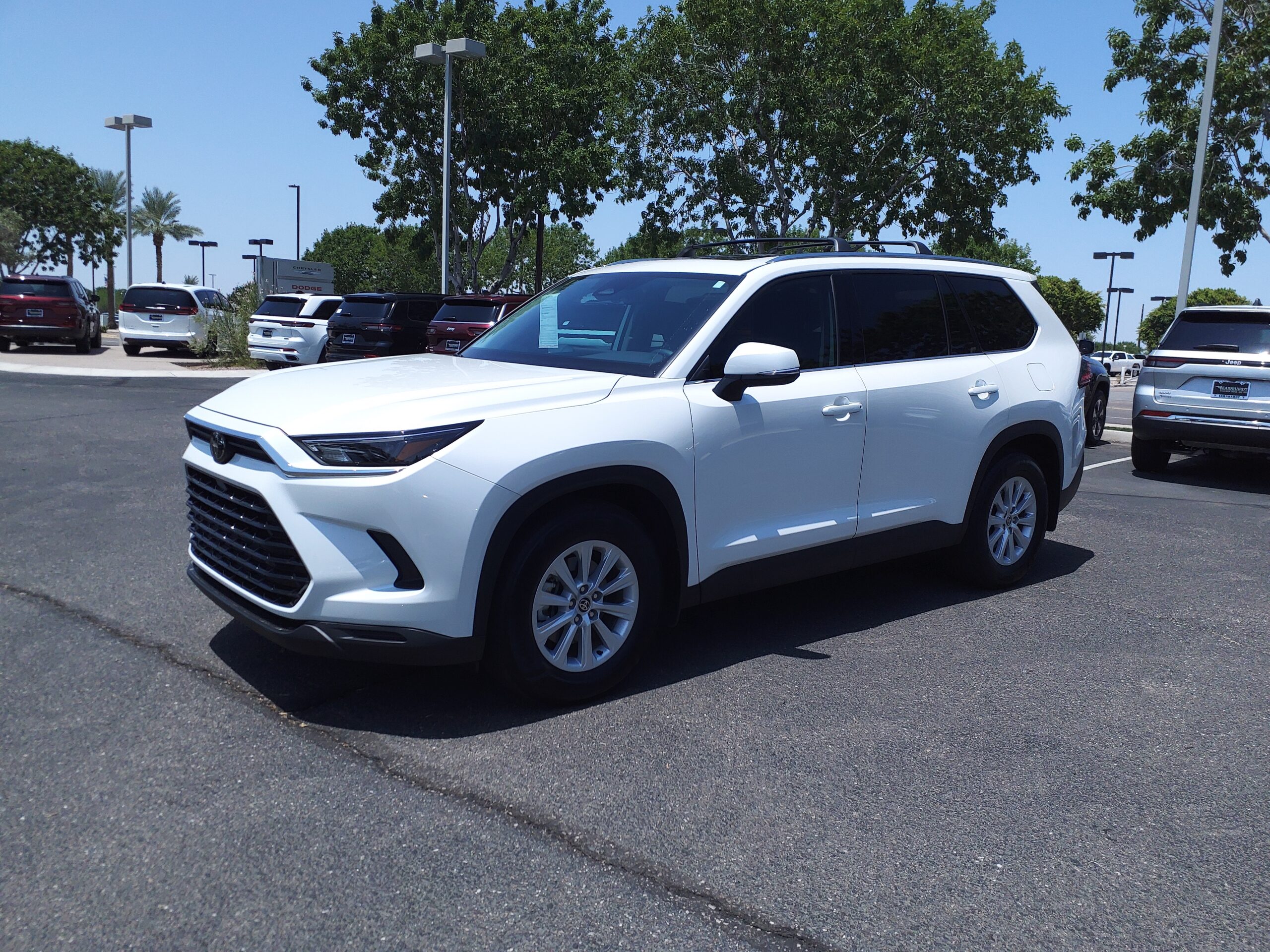
The Grand Highlander has 20.6 behind the third row and 57.9 behind the second, the most room of the bunch, and you can have an eight-seat bench or seven seats with captain’s chairs. It’s the one for a bigger crew. Starting prices run from $41,360 for the gas LE to $55,190 for the Hybrid MAX Limited.
Hyundai lists 19.1 cubic feet behind the Palisade’s third row and 46.3 behind the second. That’s 3.2 fewer than the Telluride in a vehicle that starts $545 higher, so it’s the pick only if you like its cabin and styling better, or find one in the right trim.
The Pilot has 18.6 cubic feet behind the third row, 48.5 behind the second and 113.7 at most, the biggest maximum hold here. Honda’s 2026 Pilot page shows $42,395 to $55,195, plus a $1,595 destination fee. Cargo and anchors are the reasons to buy one, but go in knowing about that Marginal rating.
The Sorento misses the line by a lot. Kia lists 12.6 cubic feet behind the third row, which is 6.5 below the Palisade, and 38.5 to 45.0 behind the second. It’s a third row for carpool days. Seven seats come on the LX, S and EX; the SX and up have six. It’s also the cheapest way into a third row on this list, at $32,590 to $47,990 for gas trims and from $39,090 for the hybrid.
Fuel matters more the more you drive, so a family that takes long road trips should look hard at the hybrids. The Telluride’s new hybrid rates 31 to 35 mpg combined on fueleconomy.gov and starts at $46,490, against 19 to 22 for the gas trims. The Palisade’s hybrids rate 30 to 34, the Sorento’s 34 to 37 and the Grand Highlander’s 34 to 36.
Take the real gear to the test drive
Bring the real gear. If you’ve ever wrestled a car seat into a tight back seat in a parking lot, you know no spec sheet predicts it. Plan on an hour at the dealership:
- Bring every car seat you own, and install each one in the spot where it will ride. Time it. If you’re sweating by the second seat, that’s your answer.
- Check the lower anchors and the top tether on each seat. Run a finger along the seat crease for anchors set deep, the issue IIHS flags on some models.
- Buckle the seat belts with the car seats installed. Make sure an older child can reach the buckle without help.
- Climb into the third row yourself, then with a child. Check the legroom, the headroom, and how easily a seat folds and tips.
- Load the stroller with every seat in use. If it only fits with the third row folded, you now know the real cargo number.
- Pack a typical weekend trip: bags, a cooler, a sports bag. See what is left for the grocery run.
- Check the build date on the door label. IIHS says the Telluride, Palisade and Sorento awards cover only later builds.
- Park it in your own garage or a tight lot. Open every door fully with a car seat in place.
Photo: Kia Telluride by Alexander Migl, CC BY-SA 4.0, via Wikimedia Commons.
Frequently asked questions about family SUVs
What is the safest family SUV?
Of the SUVs here, the Telluride or the Palisade. Both earned Top Safety Pick+ from IIHS, and every rear-passenger measure was rated Good. Check the build date, because IIHS says the award covers only later builds of the Telluride, Palisade and Sorento.
Do you need a third row for a family of four?
Usually not. A third row costs you cargo room and money. A two-row SUV like the Passport has 44.0 cubic feet behind the second row. A third row only earns its place if extra riders show up most weeks.
Which family SUV is easiest for car seats?
The Telluride, Palisade, Passport and Pilot all earned a Good+ LATCH rating from IIHS, which means more places to attach a seat. The Telluride leads, with four fully equipped rear positions. Bring your own seats to the test drive, because ratings can’t tell you how yours fit.
What is the best family SUV with a third row?
The Kia Telluride. It combines an IIHS award, Good+ car-seat anchors, 22.3 cubic feet behind the third row and a start under $40,000. Choose the Grand Highlander only if you need the extra legroom and cargo.