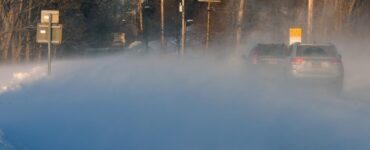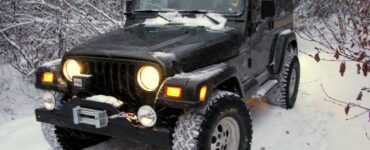
Winter tires vs all season comes down to snow and ice: winter tires stop shorter, and the gap is biggest on ice. All-weather tires sit in the middle. The right pick depends on how often you see snow, ice and temperatures near freezing.
Updated November 8, 2026.
Winter tires vs all season vs all weather at a glance
Before you spend a dime, think about why this matters. Your tires are the only part of the car that touches the road. Every brake, turn and start on a cold morning goes through four small patches of rubber. Get the wrong ones for your winters and the best brakes in the world can only do so much.
I have spent years around Mountain West back roads. Winter driving there means block heaters and a kit behind the seat. Anyone who has watched a car slide gently through a stop sign at three miles an hour knows tire choice is not a nerdy detail. The table below sorts out the three types in plain terms.
| Feature | Winter | All-weather | All-season |
|---|---|---|---|
| Rubber and cold | Soft compound made to stay flexible in freezing cold | Compound that stays more pliable in the cold and holds up in summer heat | Harder compound that starts to stiffen below 45°F |
| Tread | Many small slits for biting into snow and slush | Varies by model; look for the snowflake | Fewer biting edges than a winter tire |
| 3PMSF symbol | Yes | Yes | No (M+S marking only) |
| Best for | Temperatures below 45°F, ice, unplowed roads | Slush and occasional snow, city and suburban driving | Rain and dry roads, with light snow when it stays above 45°F |
| Treadwear claim | Consumer Reports says three or four seasons if you take them off each spring | Check the maker’s mileage warranty | Check the maker’s mileage warranty |
| Price for four, common crossover size | $320–$940 | $267–$900 | $178–$927 |
The price row is for one common crossover size, 225/65R17: four tires, priced today, before mounting. Your size and brand will move the numbers. Kelley Blue Book says a set from a major maker can run $1,000 or more.
The compound row is the one most people skip, and it is the one that matters. Michelin says all-season rubber starts to stiffen below about 45°F. That happens before a single flake of snow shows up. A stiff tire grips less, even on bare pavement. You can read the maker’s explanation of the seasonal tire types on Michelin’s tire guide.
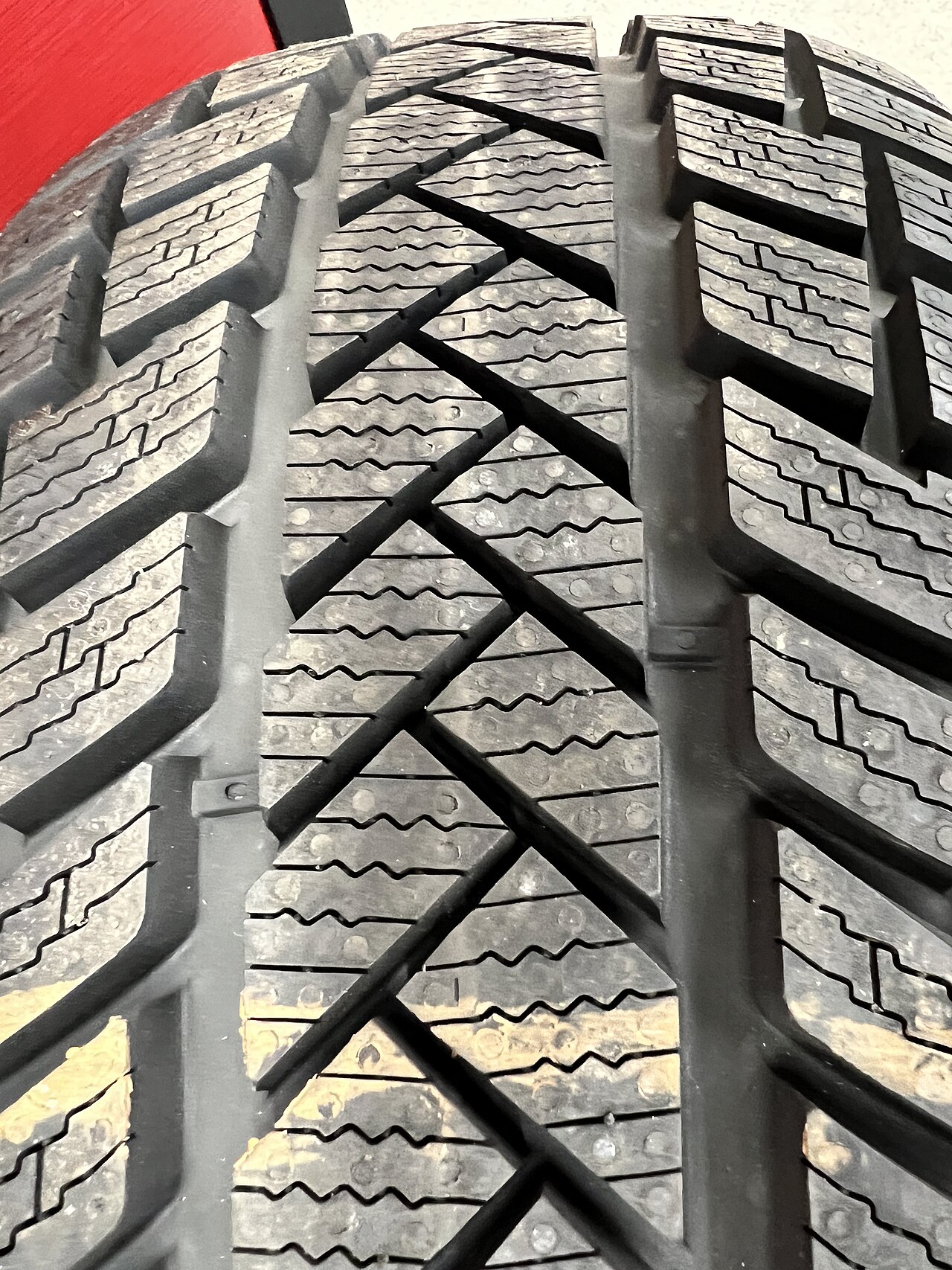
That is also where the 3PMSF symbol comes in. It is the three-peak mountain snowflake on the sidewall, and it means the tire passed a standard traction test on medium-packed snow. The Tire and Rubber Association of Canada says the symbol has been in use since 1999. Tires that carry it must pass the ASTM F-1805 test (TRAC explains the test). The M+S marking is a different animal. Continental says it comes from the shape of the tread, and its snow grip is never measured.
One thing to note: Michelin says the snowflake test does not cover pure ice. So the symbol tells you a tire grips on packed snow, not that it will stop well on a glazed intersection. Keep that in mind for the next section.
Winter tires vs all season stopping distance
If you only read one section, make it this one. Stopping is where a tire choice can decide whether you stop in your own lane. Most of us have felt that half-second when the brake pedal goes down and nothing much happens. Better tires can shorten that moment.
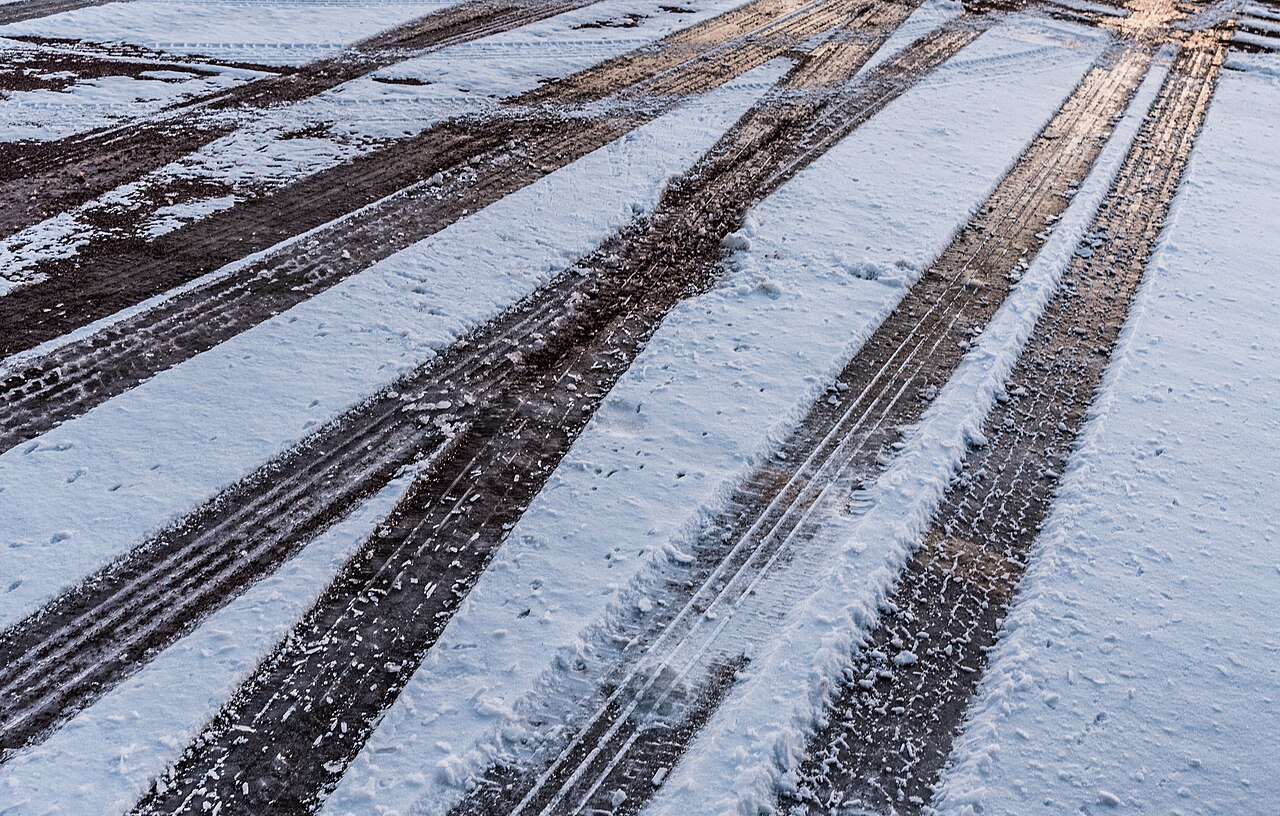
Tire Rack ran a 2026 test of ten tires in one size on one midsize sedan. Tyre Reviews reported the numbers. The set had five winter tires, three all-weather tires and two all-season tires. On snow, braking from 25 mph took the all-season tires about 81 to 82 feet. The winter tires took about 56 to 63 feet. The best of them stopped roughly 25 feet shorter than the better all-season. Details are in the Tyre Reviews write-up of the test.
Ice told the same story, only louder. Braking from 12 mph, the all-season tires needed about 55 to 58 feet. The two best winter tires needed about 39 feet. That is a gap of roughly 16 feet. The speed is about what you might drive on an icy side street.
The all-weather tires landed between the two groups on most of the snow and ice results. Their snow braking ran from about 59 to 73 feet. Their ice braking ran about 51 to 54 feet. One all-weather tire stopped on snow about as well as most of the winter tires. Models differ a lot inside each type.
My take: the test also shows that “winter tire” is not a magic label. One winter tire in the set stopped on ice about like the all-weather tires. If you are shopping for ice, look at test results for the exact model, not just the category.
Canadian research points the same direction. The Tire and Rubber Association of Canada cites a Traffic Injury Research Foundation study. It found winter tires can stop up to 30 percent shorter than all-season tires near freezing. Consumer Reports says winter tires grip better for starting in snow and stopping on ice (Consumer Reports’ winter vs all-season page).
A fair caution: this is one test, one car and one tire size. Real roads vary, and your results may differ. Still, the direction has been the same in every source I read.
Are all-weather tires good enough for snow?
For a lot of people, yes, and that is good news for your wallet. Say your winters bring a few snowy days, plowed roads and slush. An all-weather tire can cover you without the spring and fall swap. You buy one set, leave it on, and you never have to remember where the winter set is stored.
Tire Rack’s test has a line I like. The Tyre Reviews writer called the top all-weather tire on snow “a strong year-round option for snow country rather than a true winter replacement.” That sums it up. All-weather is a strong all-rounder. It is not a dedicated winter tire.
So pick all-weather if you drive mostly on cleared roads in a city or suburb. It fits if you can wait out the worst storms and hate swapping tires twice a year. Skip it if you live on a hill, drive unplowed roads, cross mountain passes, or see real ice most weeks. Those days are exactly where the winter-tire gap showed up in the test.
One more check before you buy: look for the three-peak mountain snowflake on the sidewall of any tire sold as all-weather. That symbol is what separates it from an all-season.
Do you need winter tires with AWD?
This question comes up in every Mountain West parking lot, and I get why. AWD feels like armor, and plenty of people stop worrying once they have it.
Here is the catch: AWD helps you get going, but stopping still comes down to your tires. Consumer Reports says winter tires suit front-, rear- and all-wheel-drive cars and that they outperform most all-season tires for stopping and starting. Colorado’s transportation department says its traction law does not require AWD or 4WD. It “highly recommends” them in the mountains. Neither source says AWD replaces good tires. In my view, put your money into the tires first and the drivetrain second. Want to see which SUVs handle snow well? Our guide to the best SUV for snow and ice goes through them.
If a teenager in your house is about to face a first winter, tires are a smart place to put money. Our picks for cars for teen drivers cover the car side. The tires are your call.
Winter tires vs all season price over four years
Now the money part, because this is where most people stall. Winter tires feel like a pure extra cost. Look at it over four years, though, and the picture is calmer.
For a common crossover size, a set of four winter tires runs $320–$940 today, before mounting. A set of four all-weather tires came to $267–$900, and four all-season tires came to $178–$927. The low ends are budget brands; the big names sit near the top of each range. Kelley Blue Book says a set from a major maker can cost $1,000 or more. Large or premium sizes can run above my range.
Now stretch it over time. Consumer Reports says you may get three or four seasons from a winter set if you take them off at the end of each winter. Spread over four seasons at the low end and three at the high end, that is about $80–$313 per winter. Kelley Blue Book makes a point I agree with. Your driving is split between two sets, so each set wears more slowly. Buying winter tires does not necessarily double your long-term tire costs (Kelley Blue Book’s cost guide).
- Winter set plus your all-season set: one extra purchase of $320–$940 over four years. You save some wear on the other set. Mounting and storage fees are extra.
- All-weather set instead of all-season: the sets cost about the same. The upgrade is close to free when it is time for new tires.
- All-season only: the lowest cost on paper, but you are counting on a tire that stiffens below 45°F.
My pick for most budgets is simple. If you see real ice and snow, buy the winter set and keep your all-seasons for the rest of the year. If winters are mild or mostly slush, make your next replacement an all-weather and skip the swap.
A practical note from Kelley Blue Book: separate winter wheels raise the upfront cost but can lower your yearly mounting fees. Some shops also charge to store off-season tires, so ask first.
When to switch to winter tires
Timing matters because a winter tire can wear faster in warm weather. Michelin and Kelley Blue Book give the same rule of thumb. Switch when temperatures stay near or below 45°F, and switch back when it warms up. Michelin adds that fitting winter tires a little early does not wear them out much faster.
Always put on four matching tires. Tire Rack found that a rear-wheel-drive car with all-seasons in front and winter tires in back needed slower cornering. It also needed longer stops than the same car on four winter tires. Consumer Reports also says to install four.
Check your tread and pressure while you are at it. NHTSA says tread should be at least 2/32 of an inch, and that tire pressure drops as the air gets colder. Set it to the number on the driver-door label, not the number on the tire itself (NHTSA’s winter driving tips). Kelley Blue Book says pressure can fall up to 2 psi for every 10°F drop. A cold snap can leave you low overnight.
For winter driving, Kelley Blue Book suggests replacing tires at 6/32 of an inch, since worn tread hurts snow grip. That lines up with Colorado, where passenger vehicles need at least 3/16 inch of tread when its traction law is on. The state says that law can apply on I-70 from Morrison to Dotsero from September 1 through May 31. It accepts winter or all-weather tires with the mountain-snowflake icon, M+S or M/S, or chains. The fine is $100 plus a $33 surcharge. It is $500 plus a $157 surcharge if the violation closes a travel lane (Colorado DOT’s traction law page).
Shopping for a rig that will live on winter roads? Our list of the best used trucks is a good place to start. Whatever you buy, budget for the tires.
Which should you buy?
- Buy winter tires if you see ice, drive unplowed or hilly roads, or live where it stays below 45°F for weeks.
- Buy all-weather tires if you want one set for slush and the occasional snowy day. You should be able to stay home in the worst storms.
- Stay with all-season tires if winters are mild and roads are cleared fast, and keep an eye on the forecast.
My honest view: the gap between winter and all-season tires is bigger than most drivers think. The gap between winter and all-weather is smaller than you might expect. Pick for the worst day of your winter, not the average one.
Frequently asked questions about winter tires vs all season
Are winter tires worth it?
Yes if you see ice or regular snow. In Tire Rack’s 2026 test, the best winter tires stopped about 16 feet shorter on ice than the better all-season tire. Consumer Reports also says winter tires grip better for stopping on ice. If your winters are mild, an all-weather tire may be enough.
Are all-weather tires as good as winter tires?
Not on ice or deep snow. They are a big step up from all-season tires and stay on all year. That makes them a smart pick for city and suburban winters. If you drive unplowed roads or mountain passes, I would pick a true winter tire.
Can I mix winter tires and all-season tires?
I would not. Tire Rack and Consumer Reports both say to run matched tires on all four wheels. Mixing can change how the car handles in corners and on the brakes.
What does the three-peak mountain snowflake mean?
It means the tire passed a standard traction test on medium-packed snow. Look for it on the sidewall when you shop. It is a better sign than M+S, but it does not promise good braking on sheet ice.
Do I need winter tires with AWD?
AWD can help you get moving, but stopping is a tire job. Consumer Reports says winter tires grip better for stopping on ice and suit all-wheel-drive cars too. If you drive in real winter, I would buy the tires before paying extra for the drivetrain.