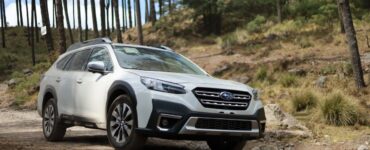
For a daily commute, the Toyota Prius is the hybrid to buy. The front-drive Prius LE is rated 59 mpg in town, the best city figure of the seven cars here. The Toyota Corolla Cross Hybrid is the one to skip for commuting. It posts the lowest mileage and the highest entry price on the list.
Published November 14, 2026.
A Phoenix July does odd things to a commute. The car bakes all day and the air conditioning runs the whole drive home. Then the freeway ramps crawl right when you are trying to save fuel. I have kept family cars going through enough of those summers to know which sticker number matters for a daily grind. It is city mpg, not the combined figure the ads lead with.
That is the lens for this list. Seven current hybrids are ranked for the daily drive, with EPA mpg, each maker’s starting prices and a yearly fuel bill at a low and a high gas price. For the wider field, SUVs included, start with the best new hybrid cars roundup.
Best hybrid cars for commuting at a glance
MPG figures come from the EPA at fueleconomy.gov for the front-drive versions, and where trims differ I show the range. Prices span the cheapest to the dearest hybrid trim the maker lists today, before destination. Model years are whatever each maker shows now: 2027 for most, 2026 for the Elantra Hybrid. The Corolla Cross Hybrid carries 2026 EPA figures, since its 2027 rating is not posted yet. Fuel cost assumes 12,000 miles a year at $3.48 to $5.11 a gallon. The low end uses the best combined mpg, the high end the worst.
| Car | EPA city mpg | EPA combined mpg | Starting price range | Fuel per year, 12,000 miles |
|---|---|---|---|---|
| 1. Toyota Prius | 54–59 | 51–55 | $28,755–$35,770 | $759–$1,202 |
| 2. Toyota Corolla Hybrid | 50–53 | 47–50 | $25,175–$29,540 | $835–$1,305 |
| 3. Kia Niro | 53 | 50 | $29,890–$38,990 | $835–$1,226 |
| 4. Hyundai Elantra Hybrid | 49–51 | 50–54 | $25,650–$30,000 | $773–$1,226 |
| 5. Toyota Camry | 47–52 | 46–51 | $29,700–$36,100 | $819–$1,333 |
| 6. Hyundai Sonata Hybrid | 44–47 | 47–51 | $29,450–$38,500 | $819–$1,305 |
| 7. Toyota Corolla Cross Hybrid | 46 | 42 | $31,415–$34,130 | $994–$1,460 |
Prices are approximate, current as of publication, and change frequently — confirm the latest price with the retailer before buying.
Are hybrid cars good for commuting?
Yes, and commuting is where they earn their price. The EPA explains that hybrids use regenerative braking to recover energy a normal car throws away as heat, and stop-and-go traffic is nothing but braking. That is why the Prius, Corolla Hybrid and Niro rate higher in the city than on the highway, the reverse of a gas car.
Full-service stations were still around when I was a kid, and a fill-up was something an attendant did while you stayed in the seat. Gas was an afterthought then. Now it is the line in the monthly budget I look at first. A car that sips in traffic changes that line more than any trim package does.
Heat matters too. Air conditioning is the main reason fuel economy drops in hot weather. The same EPA site notes that aggressive driving can cost 10% to 40% in stop-and-go traffic. Shade the car when you can, and take the ramps gently. Those two habits are free.
Best hybrid cars for commuting, ranked
1. Toyota Prius: the commuter’s pick
Nothing else here comes close in traffic. The front-drive Prius LE is rated 59 city and 50 highway, the best city number on the table, and Toyota lists the XLE, Nightshade and Limited at 54/46. It suits anyone with a long, slow drive and no need for a big back seat. Skip it if you want a roomy cargo area, because this is a low hatchback. My advice is to buy the LE and keep the $7,000 you would spend reaching the Limited. That money buys a fixed glass roof, and I would not want one over my head in a desert July.
2. Toyota Corolla Hybrid: the cheapest way to 50 mpg
This is the one I would send a first-time buyer toward. At $25,175 for the LE it is the lowest starting price among the hybrids here, and it is rated 53 city and 50 combined. It is best for a solo commuter who wants a cheap, plain car that sips. Skip it if you carry adults in the back often, since the cabin is compact. Watch the SE. It adds a Sport mode and rates 50 city and 47 combined, so you pay $2,440 more to use more fuel. I would take the LE or the XLE.
3. Kia Niro: the small crossover that does not punish you
The Niro is the only high-seat choice that stays near the sedans, with 53 city, 46 highway and 50 combined on every trim. Kia lists the hybrid from $29,890 for the LX to $38,990 for the SX Touring. It is best for someone who is tired of climbing down into a low car and still wants a hatch for groceries. Skip it if your commute is mostly freeway, because its 46 highway trails both Hyundai hybrids by a wide margin. Since the mileage never changes up the ladder, I would buy the LX and spend the difference on good tint and a sunshade.
4. Hyundai Elantra Hybrid: the freeway sipper
Look at the Blue trim, rated 51 city and 58 highway for 54 combined. That 58 is the best highway number in this group. Hyundai’s site shows the 2026 Elantra Hybrid from $25,650 to $30,000. It is best for a commute that is more open road than red lights. Skip it if you spend your day in crawling traffic. The other trims drop to 49 city and 50 combined, and the Toyotas pull ahead. I would pick the Blue and ignore the rest of the ladder.
5. Toyota Camry: the big one that still behaves
Every Camry on Toyota’s page is a hybrid now, and the LE posts 52 city and 51 combined, remarkable for a midsize sedan. It is best for a commuter who also hauls a carpool or a family on weekends. Skip it if you park in tight city garages every day. The SE, XLE and XSE all rate 47 city and 46 combined, so the LE is the efficiency play at $29,700. Ventilated front seats would be tempting in Phoenix heat, but they are an option on the XLE, which already starts $5,200 above the LE.
6. Hyundai Sonata Hybrid: for the long highway haul
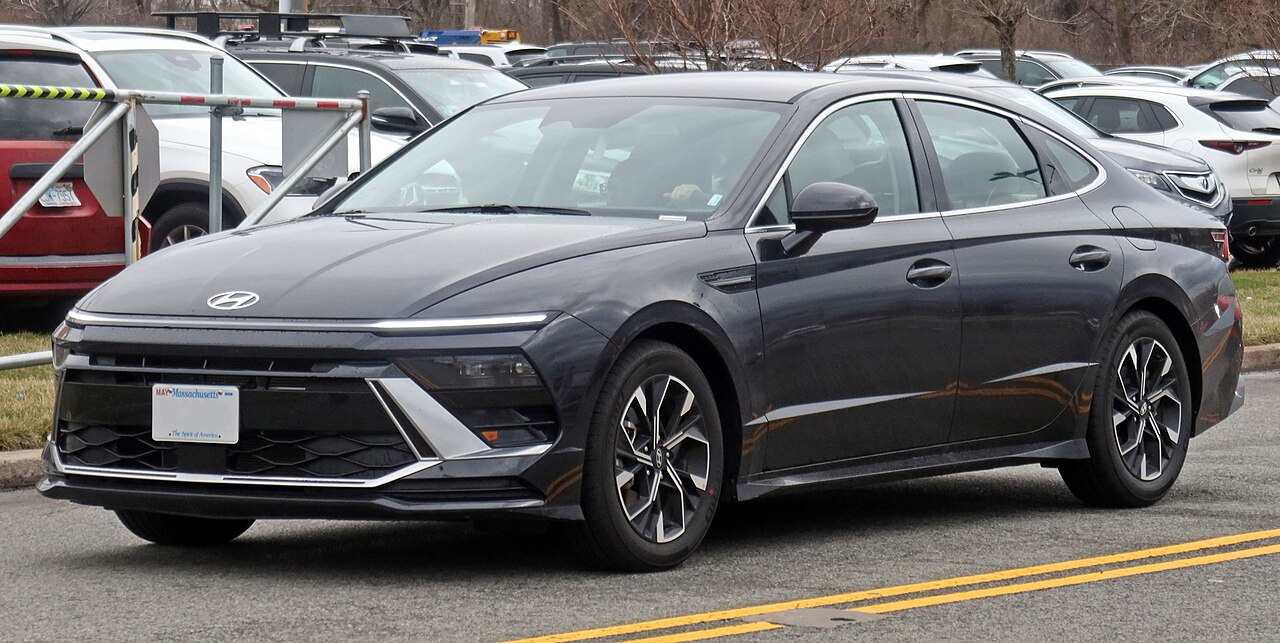
The Sonata Hybrid is built for a straight shot. The Blue trim is rated 47 city and 56 highway, and the other trims 44 city and 51 highway. It is best for a 40-mile freeway commute where you want a bigger back seat than the Elantra gives you. Skip it if you spend your day in stop-and-go, because 44 city is the weakest sedan number here. The Limited tops out at $38,500, the highest sedan price on this list. None of its extras saves a drop of fuel. Stick with the Blue at $29,450.
7. Toyota Corolla Cross Hybrid: the one I would skip for commuting
The Cross Hybrid is the loser here, and only because of what this list measures. It is rated 46 city and 42 combined, and Toyota’s hybrid trims run $31,415 to $34,130. That is the lowest mpg and the highest starting price of the seven. It makes sense if you need standard all-wheel drive for snow or a steep driveway. Skip it for a flat, dry commute. There it will cost you $994 to $1,460 a year, against $759 to $1,202 for a Prius.
What a hybrid commute costs in fuel each year
Gas prices swing, so I ran the math twice. The EIA’s weekly survey for November 9 shows regular at $3.48 a gallon on the Gulf Coast, $4.00 nationally and $5.11 on the West Coast. Pick your own number, then follow these steps.
- Take your yearly miles and divide by the car’s combined mpg. That is gallons a year.
- Multiply gallons by your local price per gallon, once low and once high.
- If your drive is mostly slow traffic, use the city mpg in the first step instead.
Take the Prius at 8,000 miles a year. That is 8,000 divided by 55, about 145 gallons at $3.48, or $506, and 8,000 divided by 51, about 157 gallons at $5.11, or $802. Run your own miles and you will see quickly whether the gap between two cars pays back before you sell.
Best hybrid sedan for commuting: matching car to drive
Let the drive pick the car. Mostly red lights points to the Prius or the Corolla Hybrid. Mostly freeway points to the Elantra Hybrid Blue or the Sonata Hybrid Blue. A carpool or a family points to the Camry LE, and a higher seat points to the Niro.
Before you sign, check how the exact model did in crash testing; the list of the safest cars to buy covers the IIHS winners. If the new-car price is the sticking point, look at the best used hybrids first. A few years of depreciation moves the payback faster than any trim upgrade.
Frequently asked questions about hybrid cars for commuting
What is the best hybrid car for a long commute?
For a long freeway run I would pick the Elantra Hybrid Blue, rated 58 mpg on the highway. The Sonata Hybrid Blue, at 56, is the roomier option. If the long commute includes real traffic, the Prius is the better call because it holds its mileage when you are stopping every block.
Do hybrids save money on a short commute?
They save less, because savings scale with miles. At 8,000 miles a year the Prius uses $506 to $802 of fuel. The price gap to a plain gas car can take years to close. On a short commute I would buy the cheapest hybrid on the list, the Corolla Hybrid LE, and not pay for extras.
Is a hybrid sedan or a small crossover better for commuting?
The sedan wins on mileage, but the Niro is close enough to make the crossover worth a look. I would choose by how you get in and out of the car. If a low seat bothers your back or knees, take the Niro and stop second-guessing it. Skip the Cross Hybrid unless you need all-wheel drive.
Do hybrids lose mileage in extreme heat?
They can, because air conditioning is the main reason fuel economy slips in hot weather. I would not let that scare you off a hybrid. Park in shade when you have the choice, and let the cabin vent before you turn the air up. Expect the real number to run a little under the sticker in July.
Fuel figures here are planning estimates, not financial advice.
Sonata photo: Kevauto, Wikimedia Commons, CC BY-SA 4.0